GPU Buying Guide Mid-2025: RTX 5000 vs RX 9000 vs Arc Battlemage
The GPU market in mid-2025 is genuinely competitive for the first time in years. Here is where each vendor stands and which card makes sense at each price point.
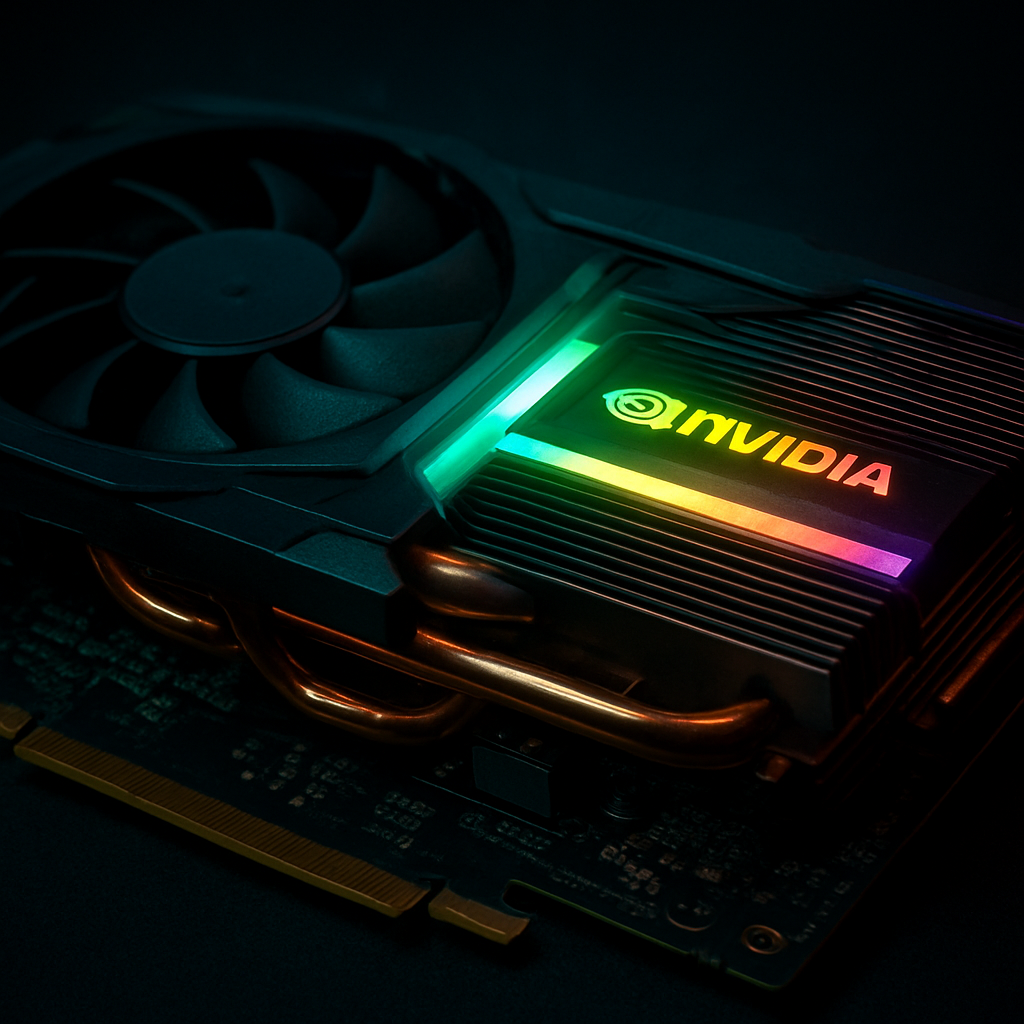
The discrete GPU market has not been this interesting since the AMD Vega days. Three vendors are now genuinely competing at multiple price points, AI upscaling has levelled the rasterisation playing field, and VRAM has finally stopped being a luxury.
The Current Landscape
NVIDIA RTX 5000 Series
The Blackwell generation continues NVIDIA's strength in ray tracing and DLSS. DLSS 4 with Multi Frame Generation is a legitimately game-changing feature on supported titles, effectively tripling frame rates over native in some benchmarks.
Key cards:
- RTX 5070 (€549) — The strongest value in the lineup. Matches the 4090 in rasterisation at one-third the original cost.
- RTX 5080 (€999) — For 4K gaming without compromise. The 16 GB VRAM ceiling has finally lifted.
- RTX 5090 (€1999+) — A content creation and AI inference monster, almost irrelevant for gaming ROI.
AMD RX 9000 Series (RDNA 4)
AMD's RDNA 4 generation finally delivers a competitive uplift after RDNA 3 disappointed. FSR 4 is now machine-learning based and competes directly with DLSS 3 quality — a meaningful change from the algorithmic FSR 3.
Key cards:
- RX 9070 XT (€479) — Matches the RTX 5070 in rasterisation, costs €70 less. No MFG is the headline tradeoff.
- RX 9080 (€699) — Excellent for the money. 20 GB VRAM is class-leading at this tier.
Intel Arc Battlemage
Arc B580 and B770 have genuinely rehabilitated Intel's GPU reputation. The B580 at €249 is the best sub-€300 card available, offering 12 GB GDDR6 and Xe Matrix Extensions for upscaling via XeSS 2.
Price-to-Performance Analysis
At 1080p gaming: Intel Arc B580 at €249 is the rational choice. Nothing touches it per euro at this resolution.
At 1440p gaming: The RX 9070 XT at €479 wins on pure rasterisation value. If you are invested in a DLSS-heavy game library, the RTX 5070 justifies its €70 premium.
At 4K gaming: RTX 5080 for maximum quality with DLSS, RX 9080 for maximum VRAM headroom and open standards.
The AI Workload Angle
If you plan to run local LLMs alongside gaming, VRAM is the primary constraint:
- 7B parameter models quantized to 4-bit need ~4 GB VRAM
- 13B models need ~8 GB
- 70B models (Q4) need ~40 GB
For gaming-plus-AI use, the RX 9080's 20 GB is the most sensible configuration at a non-extreme price point.
What I Would Buy Today
Under €300: Intel Arc B580 — no contest. Under €500: AMD RX 9070 XT — better rasterisation value than RTX 5070, excellent FSR 4. Under €800: AMD RX 9080 — the VRAM advantage at this price tier is real. Under €1100: NVIDIA RTX 5080 — if you are in the NVIDIA/DLSS ecosystem and care about ray tracing.
The era of NVIDIA charging a 40% premium for equivalent rasterisation performance appears to be over, at least below the flagship tier.